Overview
Planning to buy the iPhone 17 during Flipkart’s Big Billion Days (BBD) 2026 sale? This comprehensive guide deconstructs how to get the 256GB base model at an effective price of ₹77,999 by leveraging flat platform discounts, bank offers (ICICI, Axis, and Flipkart Axis/SBI credit cards (successful application will save you additional ₹1,250 via Flipkart vouchers)), and trade-in exchange bonuses (over & above exchange value). It also provides a detailed hardware analysis of the iPhone 17’s 120Hz LTPO ProMotion display, 3nm A19 chipset, and dual 48MP cameras, alongside an intergenerational comparison with the iPhone 15 and 16. Finally, discover advanced savings strategies using Zingoy cashback, affiliate tracking hygiene, and gift card arbitrage to maximize your festive season savings.
Introduction
The Indian e-commerce landscape is annually defined by the frenetic activity and immense capital flow of the festive season, primarily spearheaded by Flipkart’s Big Billion Days (BBD) and closely rivaled by Amazon’s Great Indian Festival.
In the 2026 iteration of this retail phenomenon, consumer electronics remain the dominant category, with Apple’s hardware consistently functioning as the primary volume driver and aspirational anchor.
Among the myriad of digital storefront deals, the price dynamics surrounding the Apple iPhone 17, especially in the wake of the newly launched iPhone 18 series, represent a masterclass in retail strategy, anchor pricing, and consumer financial engineering.
Flipkart recently unveiled that the 256GB base model of the iPhone 17 will be available at an effective price of ₹77,999 during the BBD 2026 sale event.
However, achieving this highly publicized sub-₹75,000 price point requires a nuanced understanding of base platform discounts, specific bank partnerships, and the variable metrics of exchange bonuses.
Furthermore, sophisticated consumers can drastically amplify their net savings by routing their purchases and financial decisions through advanced cashback and reward platforms, specifically Zingoy.
Zingoy operates as a premier cashback reward ecosystem that allows users to layer secondary financial yields on top of primary e-commerce discounts, effectively lowering the true cost of acquisition well below the advertised rates.
This article analyzes the underlying mechanics of the iPhone 17 deal on Flipkart, deconstructs the hardware value proposition of the device itself, maps out optimal intergenerational upgrade paths, and provides a highly detailed framework for leveraging Zingoy’s ecosystem to extract maximum financial yield during the 2026 festive sales.
Flipkart Big Billion Days 2026 x iPhone 17 Price Dynamics
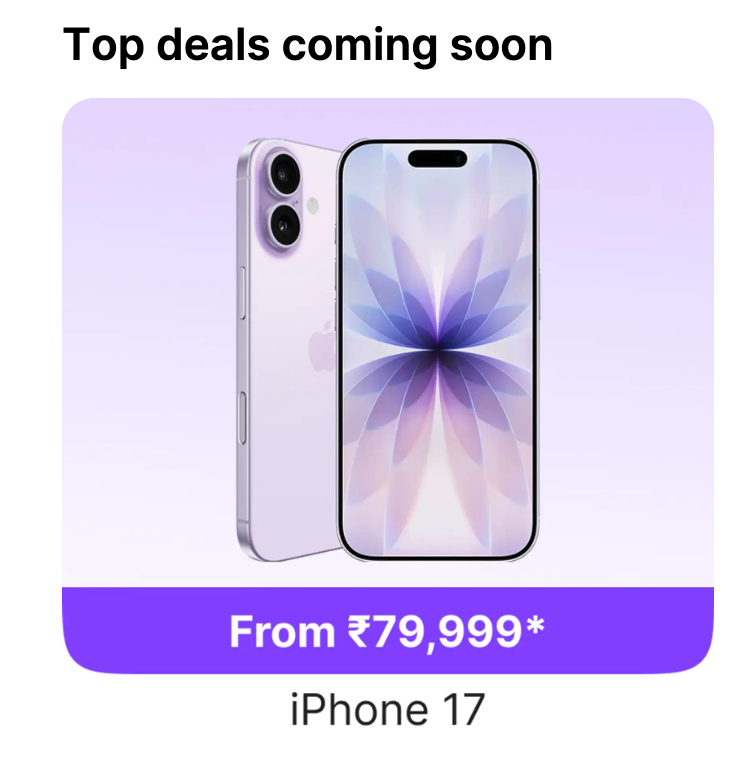
The temporal structure of the Big Billion Days sale is meticulously designed to create psychological urgency, reward platform loyalty, and manage immense server loads through phased rollouts.
For 2026, Flipkart has officially scheduled the platform-wide commencement of the sale for October 9. The modern e-commerce playbook relies heavily on tiered access to drive premium memberships and co-branded credit card adoption, making the initial hours of the sale the most critical window for high-demand items.
Consequently, a 24 hour early access window begins precisely at midnight on October 8, 2026. This crucial head start is strictly reserved for Flipkart Plus members, Flipkart Black (formerly VIP) members, and holders of eligible co-branded credit cards, the Flipkart Axis Credit Card and Flipkart SBI Credit Card.
| Sale Phase | Date & Time | Eligible Demographics | Strategic Advantages |
| Early Bird Deals | September 24, 2026 onwards | All Registered Users | Pre-sale price locks, wishlist preparation, early discounting |
| BBD Early Access Window | October 8, 2026 (12:00 AM) | Flipkart Plus, Black, select Credit Cardholders | Priority inventory access, avoidance of flash stockouts |
| General Public Sale | October 9, 2026 (12:00 AM) | All Registered Users (new users can register on the spot) | Broadest availability of remaining inventory and hyperlocal deals |
The early access window is practically mandatory for acquiring high-velocity SKUs (Stock Keeping Units) such as the iPhone 17. Historically, aggressive price drops on flagship smartphones result in immediate stock depletion or dynamic price increases within the first few hours of the sale.
Consumers aiming to secure the iPhone 17 at its lowest advertised tier must operate within the initial minutes of the October 8 early access window, ensuring their payment instruments, shipping addresses, and Zingoy cashback portals are pre-configured to minimize friction.
Flipkart also supplements the main event with gamified engagement mechanisms, such as the Supercoin Funfair, which allows users to complete tasks to earn digital currency for extra savings, and Countdown Hours featuring top influencers revealing category-specific deals.
Amazon operates in a parallel timeline, launching its Great Indian Festival on October 8, 2026, utilizing SBI debit and credit cards for its primary 10% instant discount vehicle. This creates a highly competitive duopoly where pricing adjustments often happen dynamically based on competitor actions.
iPhone 17 Price History on Flipkart (Jan-Sept 2026)
- January – June 2026: Prices typically hovered between ₹75,900 and ₹79,400, reflecting steady post-launch stabilization.
- July 2026: Fluctuation continued with prices ranging from ₹75,900 to ₹82,700, frequently dropping to promotional points like ₹77,900.
- August 2026: Remained stable at a higher baseline, mostly ranging between ₹80,900 and ₹82,900.
- September 2026 (Pre-BBD): Held steady at ₹82,900 for the first half of the month before the official baseline MRP was aggressively hiked to ₹99,900 ahead of the Big Billion Days sale.
Generally, authorized offline and online resellers (Vijay Sales, Reliance Digital, Imagine) maintain baseline pricing close to Apple’s official launch MRP with occasional bank cashback offers during non-festive months, whereas e-commerce platforms like Amazon mirror Flipkart’s aggressive discounting structure during major promotional events.
Why is the iPhone 17 price on Flipkart BBD less than offline retailers like Croma, Unicorn (Apple reseller), and others
Flipkart prices are often lower than brick-and-mortar offline retailers (like Croma and Imagine) during major events due to several economic and strategic factors:
- Platform Co-Funding and Subsidies: E-commerce giants and manufacturers (like Apple) heavily subsidize prices during mega-sales (such as Big Billion Days) to drive massive sales volume and market share.
- Exclusive Bank Partnerships: Online platforms secure deep integration with credit card issuers (such as Flipkart Axis, ICICI, and SBI) to offer instant cash discounts that physical retailers often cannot match outside of specific regional promos.
- Overhead Costs: Brick-and-mortar stores have higher operational overheads, including physical retail space rent, store staffing, and localized inventory holding costs, limiting their ability to offer aggressive, platform-wide price drops.
- Trade-in Exchange Bonuses: E-commerce platforms frequently layer platform-funded exchange bonuses on top of standard device trade-in values to incentivize immediate upgrades.
Deconstructing the iPhone 17 Pricing Strategy and Anchor Economics
To truly comprehend the magnitude of the iPhone 17 discount during BBD 2026, it is necessary to analyze the preceding macroeconomic and pricing maneuvers executed by Apple and Flipkart.
The iPhone 17 was originally introduced to the Indian market in September 2025 at a starting price of ₹82,900 for the 256GB storage variant. However, in a calculated strategic move leading up to the 2026 festive season, the official Maximum Retail Price (MRP) was aggressively hiked by ₹17,000, resetting the baseline official cost to ₹99,900. The 512GB variant saw a similar elevation, reaching an official price of ₹1,24,900.
This maneuver establishes a psychological phenomenon known in behavioral economics as anchor pricing. By elevating the perceived base value of the device to nearly ₹1,00,000, subsequent discounts appear exponentially more lucrative to the end consumer.
The promotional literature for the BBD 2026 sale touts a massive ₹20,000 drop, an optic achievable only because of the preceding, carefully orchestrated price hike.
The mechanism to reach the advertised ₹77,999 price point is highly conditional, requiring the precise alignment of 3 distinct financial levers.
- First, Flipkart directly applies a platform flat discount, reducing the listed price of the ₹99,900 device to ₹84,999. This represents the immediate, unconditional savings available to all consumers regardless of their payment method.
- Second, Flipkart has forged deep banking alliances with ICICI Bank and Axis Bank for the 2026 BBD event. Utilizing an eligible credit card from these institutions yields an additional, instant gateway discount of ₹2,000 on the iPhone 17 transaction. Alternatively, if you go for Flipkart Axis or Flipkart SBI card then a massive double savings of ₹4000 are on offer.
- Third, to achieve the final advertised tier, buyers must participate in the trade-in economy. Flipkart provides a supplementary exchange bonus of up to ₹3,000, which is applied on top of the intrinsic, algorithmic valuation of the traded device.
| Pricing Component | Amount (INR) | Cumulative Effective Price (INR) |
| Revised Official Apple MRP | ₹99,900 | ₹99,900 |
| Flipkart BBD Flat Discount Listed Price | -₹14,901 | ₹84,999 |
| ICICI / Axis Bank Credit Card or Flipkart Axis / Flipkart SBI Card (successful application will save you additional ₹1,250 via Flipkart vouchers: welcome reward) | -₹2,000 or -₹4,000 | ₹82,999 or ₹80,999 |
| Maximum Trade-In Exchange Bonus | -₹3,000 | ₹77,999 |
It is critical to note that the ₹77,999 figure assumes the maximum theoretical extraction of all promotional levers. If a buyer does not possess the requisite credit card, utilizes a non-partner payment method, or lacks an eligible trade-in device that meets the criteria for the full ₹3,000 bonus, the baseline acquisition cost will default back to the ₹84,999 tier.
Comprehensive Hardware Analysis: The iPhone 17 Value Proposition
The iPhone 17 marks a major leap for Apple’s base lineup, breaking traditional Pro-tier segmentation to deliver exceptional value at ₹79,999. Key upgrades rival previous Pro models, directly resolving past critiques.
Upgrading from legacy 60Hz panels, the iPhone 17 integrates a 6.3-inch LTPO Super Retina XDR OLED display with 1-120Hz ProMotion and Always-On Display functionality.
It achieves 1,000 nits typical, 1,600 nits HDR, and 3,000 nits peak outdoor brightness. The panel is protected by Ceramic Shield 2, delivering triple the scratch resistance and reduced glare.
Powered by the 3nm A19 chipset (hexa-core CPU up to 4.26 GHz, 5-core GPU), the device includes a laser-welded vapor chamber in its unibody frame to mitigate thermal throttling during intensive tasks.
Connectivity upgrades include Apple’s N1 chip (Wi-Fi 7, Bluetooth 6.0, Thread) and the Snapdragon X80 5G modem. Base storage doubles to 256GB NVMe, backed by 8GB LPDDR5X RAM required for native Apple Intelligence on iOS 26.
Replacing the legacy 12MP ultrawide lens, the new dual 48MP Fusion array (26mm f/1.6 main with sensor-shift OIS; 13mm f/2.2 120° ultrawide) provides consistent detail across focal lengths and enables 2x optical-quality cropping. Up front, a new 18MP Center Stage camera (f/1.9) supports Dual Capture 4K recording and dynamic subject centering.
A larger 3692 mAh battery offers up to 30 hours of video playback. Fast charging supports 25W MagSafe/Qi2 and 40W+ wired PD (50% charge in 20 mins), plus 4.5W reverse wired charging. iOS 26 introduces Liquid Glass UI and built-in AI tools, along with standard IP68 rating, Emergency SOS, and Crash Detection.
Intergenerational Comparative Analysis: Fleet Strategy and Pricing
While the iPhone 17 represents the pinnacle of the base-tier evolution, the Flipkart Big Billion Days sale creates complex purchasing dilemmas by simultaneously discounting older hardware generations.
Shoppers must conduct a rigorous cost-to-benefit analysis comparing the iPhone 17 to the aggressively priced iPhone 16 and iPhone 15 models. A superficial glance at percentage discounts is insufficient; consumers must map the technological capabilities against expected device longevity.
| Hardware Feature | Apple iPhone 15 | Apple iPhone 16 | Apple iPhone 17 |
| BBD 2026 Expected Price | ₹63,999 | ~₹49,000 – ₹53,000 | ₹77,999 |
| Display Panel Technology | 6.1″ OLED, Fixed 60Hz | 6.1″ OLED, Fixed 60Hz | 6.3″ LTPO OLED, 1-120Hz ProMotion |
| Peak Outdoor Brightness | 2,000 Nits | 2,000 Nits | 3,000 Nits |
| System-on-Chip (SoC) | A16 Bionic | A18 | A19 (3nm) |
| Rear Camera Architecture | 48MP Primary + 12MP Ultrawide | 48MP Primary + 12MP Ultrawide | Dual 48MP Fusion |
| Front Camera | 12MP | 12MP | 18MP Center Stage |
| Base Storage Capacity | 128GB | 128GB | 256GB |
| Artificial Intelligence | No On-Device Apple Intelligence | Partial Support | Full Native Apple Intelligence |
The iPhone 15: The Value Floor

The iPhone 15, now 3 generations removed from the flagship tier, remains relevant in the market solely on the basis of extreme price compression.
During BBD 2026, the iPhone 15 is slated to be listed at ₹67,999 (down from its regular ₹74,900 MRP). Utilizing the ₹1,000 ICICI/Axis credit card instant discount and the maximum ₹3,000 exchange bonus, the effective acquisition cost drops to ₹63,999.
However, at ₹63,999, the iPhone 15 exhibits severe technological aging. It utilizes a legacy 60Hz display, a less efficient A16 Bionic chipset, and an inferior 12MP ultrawide camera.
Crucially, it lacks the hardware RAM capacity required for on-device Apple Intelligence tasks. It functions as a viable purchase only for consumers operating under strict budget constraints who prioritize basic iOS ecosystem entry over modern hardware capabilities and future-proofing.
The iPhone 16: The Middle Child Dilemma
The iPhone 16 presents a fascinating economic conundrum. Because Apple systematically hiked the MRP of the entire contemporary lineup, the baseline expectations for iPhone 16 pricing during BBD 2026 will fluctuate significantly, generally landing between ₹49,000 and ₹53,000.
Some aggressive early projections even hint at flash sale prices dropping as low as ₹48,999 depending on the stacking of highly specific bank offers.
The iPhone 16 utilizes an aerospace-grade aluminum frame and Ceramic Shield 1, but most critically, it remains permanently locked to a 60Hz display refresh rate and a peak brightness limit of 2,000 nits.
Its camera system relies on an asymmetric 48MP primary and 12MP ultrawide configuration. While a price point of ~₹50,000 is undeniably attractive for a 2-year-old Apple flagship, the technological delta between the 16 and 17 is massive.
The analytical consensus firmly indicates that while the iPhone 16 offers a strong immediate financial discount, the iPhone 17’s ₹79,999 price tag provides vastly superior long-term utility.
The inclusion of the 120Hz display, the doubling of base storage to 256GB, and the integration of 8GB of RAM ensures the iPhone 17 will comfortably handle software updates and expanding AI workloads well into the 2030s, preventing premature technological obsolescence that will inevitably plague the iPhone 16.
Furthermore, for those interested in the ultra-premium tiers, models like the iPhone 17 Pro (launch price ₹1,34,900) and the heavily rumored iPhone Air are expected to see clearance pricing and substantial bank discounts respectively, though their base acquisition costs remain significantly higher than the standard 17.
Strategic Purchasing Integration: The Zingoy Multiplier Effect
Obtaining the ₹77,999 price directly on Flipkart via credit cards is merely the baseline of festive shopping optimization. Sophisticated consumers recognize that e-commerce transactions do not exist in a vacuum; they belong to a broader, highly integrated affiliate and fintech ecosystem.
Zingoy, a premier cashback and gift card platform operating in India, serves as a financial multiplier, allowing users to earn secondary cashback on top of Flipkart’s intrinsic discounts and bank offers, effectively layering savings.
The Affiliate Tracking Architecture and Session Hygiene
Zingoy operates fundamentally on the principles of affiliate marketing. When a user creates a free account and clicks a uniquely generated Zingoy tracking link to navigate to the Flipkart storefront, a tracking cookie is deposited into the user’s browser.
If a purchase is executed within that specific browsing session, Flipkart attributes the sale to Zingoy as the referrer and remits a financial commission. Zingoy, in turn, passes a substantial portion of this commission back to the consumer in the form of proprietary digital currency known as Zingoy Cashback.
To ensure the successful tracking of an expensive transaction like an iPhone 17 purchase via Zingoy, consumers must adhere to strict session hygiene protocols:
- Cart Emptiness: The Flipkart shopping cart must be completely empty before clicking the Zingoy affiliate link. Items added prior to the click, or residing in saved lists, will not be tracked for cashback purposes.
- Session Continuity: The transaction must be completed in a single, unbroken online session, ideally within 30 minutes of clicking the redirect link to prevent session timeouts or cookie overwrites.
- Browser Preferences: Zingoy explicitly recommends the use of desktop web browsers such as Google Chrome, Mozilla Firefox, or Safari. App-based tracking (navigating from a mobile browser into the native Flipkart app) can occasionally strip affiliate cookies due to OS-level privacy sandboxing, leading to untracked purchases.
- No Extraneous Flipkart Coupon Codes: The application of third-party coupon codes or browser extensions not explicitly listed and sanctioned on Zingoy may instantly void the cashback tracking by overriding the affiliate attribution cookie with another source’s tag.
Once the transaction is successfully completed on Flipkart, the cashback is typically registered and tracked on the user’s Zingoy dashboard incredibly quickly, often within 5 minutes to a maximum of 2-3 days.
However, the funds remain in a pending “Tracked” state until the merchant (Flipkart) fully validates the purchase. This validation process confirms that the item was successfully delivered, paid for, and the statutory return window has expired without issue. This merchant validation cycle typically requires 45 to 60 days to clear.
iPhone 17 on Flipkart BBD x Zingoy Gift Cards
For users aiming to inject absolute certainty into their cashback earnings and bypass the wait times associated with affiliate tracking, purchasing Zingoy Gift Cards or direct Flipkart E-Gift Vouchers via the Zingoy platform represents a highly lucrative strategy.
Zingoy often yields the highest cashback percentages, sometimes reaching up to 10%, exclusively on the upfront purchase of these digital gift cards.
Consumers can purchase Flipkart Gift Cards directly on Zingoy using various payment instruments, including UPI, net banking, or existing wallets, instantly accumulating Zingoy Cashback on the purchase.
These digital vouchers contain a unique 16-digit code and PIN, and can be loaded seamlessly into the Flipkart account balance prior to the sale.
The redemption mechanics for Flipkart Gift Cards during the BBD checkout process are straightforward. Users simply select “Gift Card” as the primary payment method.
Flipkart systems allow up to 15 distinct gift cards to be combined for a single order. If the iPhone 17 cart value is ₹84,999, a user can pay the entirety of the sum via pre-loaded gift cards.
This approach completely bypasses the need to enter credit card details at checkout, which is a massive tactical advantage during the high-server-load environments and gateway crashes common during midnight flash sales.
Furthermore, if an invalid pin error occurs, users can easily rectify it by manually adding the code in the “My Account” section or verifying details with support.
Crucial Caveat for Optimization: While paying via Gift Cards ensures a frictionless checkout and guarantees immediate upfront Zingoy cashback on the voucher purchase, it generally precludes the buyer from utilizing the specific ₹2,000 ICICI/Axis credit card instant discount or ₹4,000 Flipkart card savings (discount + cashback). That specific bank offer mandates that the final transaction be processed directly on the respective bank’s credit card payment gateway. Therefore, consumers must mathematically model their unique situation to determine whether earning up to 10% Zingoy cashback on ₹80,000 worth of gift cards mathematically supersedes the flat ₹2,000 or ₹4000 bank offer.
Fintech Optimizations: Credit Cards and Alternative Ecosystems
While the baseline ₹2,000 discount or ₹4,000 savings on Flipkart relies heavily on specific ICICI, SBI (upto ₹2,016 cashback on successful application), and Axis bank partnerships, maximizing overall ecosystem wealth requires the strategic deployment of premium cashback credit cards.
Zingoy fundamentally alters the economics of credit card acquisition by offering massive onboarding cashback to users who apply for new financial products directly through their portals.
For instance, initiating an application for the HSBC Platinum Credit Card through the Zingoy platform yields a flat ₹3,400 (coming soon) in Zingoy cashback upon successful card activation and the execution of the first transaction.
The HSBC Platinum card itself is an inherently valuable financial instrument, featuring zero joining fees, zero annual renewal fees, and providing accelerated rewards (5X bonus points) after crossing a ₹4 lakh annual spend threshold.
By synthesizing the Zingoy onboarding bonus with the intrinsic rewards of the credit card, users can effectively generate free capital out of thin air that can be subsequently deployed to subsidize the iPhone 17 purchase.
Other highly notable instruments discussed within the cashback community include the Airtel Axis Credit Card (coming soon) which offer specialized caps.
It is imperative, however, for consumers to monitor their credit utilization ratio (ideally maintaining it below 30%) and aggressively avoid the temptation to overspend simply to chase cashback yields.
Finance charges, often hovering around a punitive 3.49% per month on cards like the HSBC Platinum, coupled with late fees ranging from ₹250 to ₹950, will rapidly obliterate any realized savings if balances are not paid in full.
Conclusion
The iPhone 17 price drop to an effective ₹77,999 during the Flipkart Big Billion Days 2026 sale serves as a watershed moment for the Indian consumer electronics market.
By comprehensively integrating a 120Hz LTPO ProMotion display, the highly advanced 3nm A19 chipset with its bespoke vapor chamber, and a unified dual 48MP camera architecture into the base tier, Apple has effectively eliminated the traditional compromises associated with its non-Pro devices.
At a sub-₹75,000 price point, this hardware configuration completely eclipses the value proposition of both the severely outdated iPhone 15 and the technologically stagnant iPhone 16.
However, realizing this absolute lowest price requires surgical retail execution. Consumers must aggressively exploit the early access window to preempt inventory exhaustion.
They must meticulously leverage the Zingoy ecosystem, utilizing affiliate links with perfect session hygiene or employing gift card arbitrage to stack secondary cashback yields on top of primary bank discounts.
Furthermore, they must rigorously enforce Open Box Delivery protocols to protect their capital.
By treating the Flipkart Big Billion Days sale not merely as a brief retail event, but as a complex financial puzzle requiring strategic preparation, consumers can seamlessly merge e-commerce discounts, advanced credit card yields, and Zingoy’s robust affiliate architecture to acquire state-of-the-art Apple silicon at unprecedented market lows.